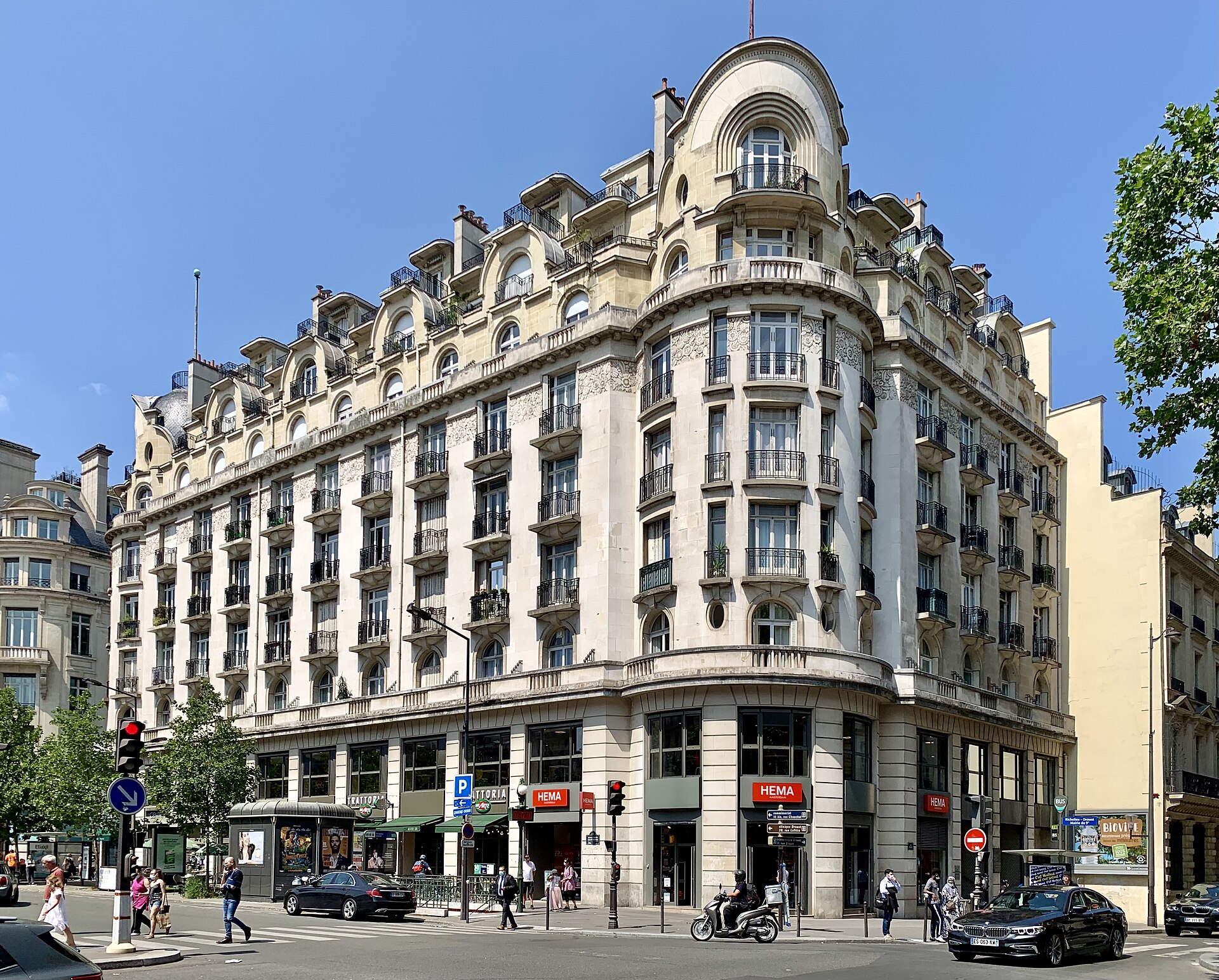
The short answer: France’s zero-interest loan
The short answer
Default pick: the PTZ (prêt à taux zéro) for first-time buyers. France lends you part of your first home at 0% interest and no application fees — 10–50% of a capped cost (€100,000–€360,000 depending on zone and household size), up to 50% for a new flat and 30% for a new house for lower incomes, with repayment that can start up to 15 years later. Fallback: the Éco-PTZ for energy renovations — up to €50,000 at 0% with no income condition. The catch: the PTZ never covers 100% of the purchase — it must be topped up with a normal mortgage — and it is means-tested on your reference tax income from two years ago.
France has one of Europe’s most generous first-buyer schemes, and expats who make France their home can use it. Since 1 April 2025 the PTZ has been extended to all new homes — flats and houses — across the whole of France, and the extension runs until 31 December 2027. The 2026 Finance Bill added higher amounts, higher income ceilings and revised percentages. This guide covers who qualifies, how much you get, and how to combine the PTZ with a French mortgage.
Every figure below is an illustrative figure or a published rule checked on 7 November 2026 — ceilings and zones change yearly, so always verify the current table on the official simulator before applying.
→ Best bank accounts in France — November 2026 Guide
Cost comparison: what the PTZ covers
| Scheme | What it covers | Maximum | Who qualifies |
|---|---|---|---|
| PTZ — new flat | 20–50% of the operation cost | Up to 50% (lower incomes) | First-time buyers, income ceilings |
| PTZ — new house | 10–30% of the operation cost | Up to 30% (lower incomes) | First-time buyers, income ceilings |
| PTZ — older home + works | Part of the cost, zones B2/C only | Works ≥ 25% of the cost | First-time buyers, renovation |
| Éco-PTZ — one measure | Energy works, 0% interest | €15,000 | No income condition |
| Éco-PTZ — overall performance | Full energy renovation, 0% | €50,000 | No income condition |
| Normal French mortgage | The rest of the purchase | Avg 3.21% (May 2026) | Debt burden ≤ 35%, max 25 years |
PTZ percentages and ceilings from the 2026 rules (Finance Bill 2026; Construction and Housing Code, article D31-10-10). The Banque de France reported the average rate on new housing loans at 3.21% in May 2026. Worked example (illustrative): a single buyer in Zone A (Paris) buying a €150,000 flat can receive up to €75,000 in PTZ — half the operation cost — and a three-person household in Zone A buying a €270,000 flat can receive up to €135,000.
The pattern is clear: the PTZ is worth the most for lower-income first-time buyers in expensive zones, and it is worth nothing if you have owned your main residence in the last two years. The income test uses your revenu fiscal de référence (RFR) from year N−2 — so the tax return you filed two years ago decides whether you qualify today.
→ Free mortgage affordability calculator — how much can you borrow?
1. PTZ — the zero-interest loan
PTZ (prêt à taux zéro)
The PTZ is a state-backed assisted loan granted subject to income conditions. The general rule requires first-time buyer status — not having owned your main residence during the previous two years — with exceptions for disability, accidents, separations, and buyers taking over a property under a real solidarity lease (BRS). Eligibility is based on income ceilings calculated from the RFR from year N−2: for one person, €49,000 in Zone A down to €28,500 in Zone C. The home must become your main residence, occupied at least 8 months a year for 6 years. The PTZ finances a main residence and never covers 100% of the transaction — it requires an additional loan and sometimes a personal contribution. The 2026 rules also open the scheme to BRS buyers and confirm combining the PTZ with MaPrimeRénov’ in major renovation cases.
→ Best bank accounts in France — November 2026 Guide
2. Éco-PTZ — 0% for energy renovations
Éco-PTZ
The Éco-PTZ is the PTZ’s renovation sibling: an interest-free loan for energy works in a home over two years old, with no income condition at all. The amount depends on how many measures you do — €15,000 for one, €25,000 for two, €30,000 for three or more, and €50,000 for an overall performance renovation — repaid over 15–20 years. The home must be used or let as a main residence, and the work must be done by a certified (RGE) contractor. It can be combined with the PTZ and with MaPrimeRénov’ in major renovation cases.
→ Free Netherlands Mortgage for Expats — November 2026 Guide
3. The mortgage that tops it up
French mortgage + PTZ
Because the PTZ never covers the whole purchase, every PTZ buyer also needs a normal French mortgage — and French mortgages have strict rules. The Haut Conseil de stabilité financière (HCSF) caps the debt burden (including insurance) at 35% of gross income and the maturity at 25 years, with up to two years of deferred amortisation where the property becomes available later. Banks may exceed these criteria only within a 20% flexibility margin. Foreigners are legally entitled to apply: in practice a deposit of roughly 30% is usually enough, and neither nationality nor country of residence is a deal breaker — though non-residents may face slightly lower loan-to-value caps. First-time buyers also get a transfer-tax shield: exemption from the extra 0.5-point transfer duty (up to 5%) that departments may charge, saving about €1,500 on a €300,000 home, for deeds signed 1 April 2025 to 31 March 2028.
→ Free Germany Mortgage for Expats — November 2026 Guide
How to apply: five steps
- Check your RFR from two years ago. Your reference tax income (N−2) decides the ceiling for your zone and household size — find it on your French tax notice.
- Confirm first-time buyer status. No main residence owned in the previous two years (exceptions exist for disability, disaster or separation).
- Run the official simulator. The ANIL simulator estimates your eligibility and the PTZ amount for your zone, household and project — use it before talking to a bank.
- Get the mortgage offer first. The PTZ is granted alongside a normal mortgage from your bank; the bank applies the HCSF 35% rule to the combined debt.
- Keep the home as your main residence. At least 8 months a year for 6 years, or the loan terms can be revisited.
→ Best bank accounts in France — November 2026 Guide
Scenario framework: which scheme fits you?
- First-time buyer, new flat, lower income. PTZ up to 50% — the maximum share, plus the transfer-tax shield on the deed.
- First-time buyer, new house. PTZ 10–30% — smaller share, but still 0% money on a large purchase.
- Owner renovating an old home. Éco-PTZ up to €50,000 — no income condition, and combinable with MaPrimeRénov’.
- Higher income, no PTZ. Normal mortgage only — average 3.21% in May 2026, within the usury caps, and the 35% debt-burden rule still applies.
→ Free mortgage affordability calculator — how much can you borrow?
How we compared: the methodology
How we compared
Rules checked: the PTZ rules in the Construction and Housing Code (article D31-10-10), the 2026 Finance Bill provisions, the Banque de France average housing-loan rate (3.21%, May 2026), the usury caps of 1 July 2026, and the HCSF underwriting criteria (35% debt burden, 25-year maximum). Criteria and weights: size of the 0% benefit (40%), eligibility breadth (30%), combinability with other aid (15%), simplicity of the process (15%). Scores are the editorial judgment of the ExpatMoneyEU Research Team — not financial advice. All figures are illustrative figures; verify the current ceilings with the ANIL simulator and your bank before applying.
For expats, the PTZ wins on one number: 0%. No bank loan in France can match a loan that charges no interest at all — which is why the income ceiling from two years ago, not the bank’s rate, is the real gatekeeper.
→ Best bank accounts in France — November 2026 Guide
What to watch in 2027
The PTZ extension runs until 31 December 2027, and the 2026 Finance Bill’s higher amounts and ceilings apply to loan offers issued from 1 January 2026. After 2027 the scheme’s future depends on the next Finance Bill — if you qualify, the window is now. The Jeanbrun scheme (statut du bailleur privé), created by the 2026 Finance Act to replace Pinel, is the new route for investors: depreciation of 3.5–5.5% a year on 80% of the price instead of a tax reduction, for purchases from 21 February 2026 to 31 December 2028. And the transfer-tax shield for first-time buyers runs to 31 March 2028.
→ Best bank accounts in France — November 2026 Guide
Sources
- French Construction and Housing Code, article D31-10-10 — PTZ amounts, income ceilings and zones.
- 2026 Finance Bill (law no. 2026-103 of 19 February 2026) — PTZ 2026 adjustments and the Jeanbrun scheme.
- Banque de France — average interest rate on new housing loans 3.21% (May 2026); usury caps 1 July 2026.
- Haut Conseil de stabilité financière (HCSF) — 35% debt-burden cap and 25-year maximum maturity.
- ANIL — official PTZ simulator (anil.org) for eligibility and amounts, checked 7 November 2026.
- Expatica — Getting a mortgage in France in 2026 (PTZ extension to 31 December 2027, zone rules).
Your next step
Compare the live offer, check your eligibility, then apply — the best rate is the one you check today:
Best bank accounts in France → Mortgage affordability calculator →